
Working with sterling silver and gold
Craftsmanship | November 2025
In the early stages of working with metal, before form has fully taken shape, there is a subtle responsiveness in the material that becomes apparent through touch. As tools meet surface, resistance and movement reveal themselves in small ways, allowing the maker to understand how the metal will behave long before the final piece begins to emerge.
Sterling silver and gold each carry their own distinct character, shaped not only by their composition, but by the way they respond to heat, pressure and time. Silver, with its softness and reflectivity, allows for a clarity of detail that can be both precise and expressive, holding fine lines while remaining receptive to refinement. Gold, by contrast, carries a density and warmth that lends itself to a different kind of presence, where weight and tone contribute to the overall balance of the piece.
Working with these materials requires an awareness that extends beyond technique. During casting, shaping and finishing, each metal responds in its own way, requiring adjustments that are guided by experience rather than fixed instruction. Heat must be applied with care, pressure moderated through feel, and each stage approached with an understanding that the material itself plays an active role in the process.
This relationship continues into the later stages of making, where filing and polishing bring the surface into clarity. Sterling silver, in particular, reveals its character through light, reflecting its surroundings while carrying the subtle marks of the hand that has shaped it. Gold, while less reactive in appearance, develops its own depth through use, its surface softening over time in a way that reflects both wear and care.
Nature offers a quiet reference for this understanding, where materials are never static, but continue to evolve through interaction with their environment. The weathering of stone, the deepening tone of wood, the gradual shift of colour in natural surfaces all reflect a process of change that is neither abrupt nor imposed. In a similar way, silver and gold carry time within them, responding to use and exposure in ways that add to their character rather than diminish it.
Patina forms gradually, particularly in silver, where exposure to air and handling introduces subtle variations in tone. These changes are not flaws, but part of the life of the piece, recording its interaction with the world and the person who wears or holds it. Gold, more resistant to change, retains its surface with greater consistency, yet still develops a quiet softness that reflects its passage through time.



Within our workshop, the choice to work with sterling silver and gold is rooted in this understanding, where materials are selected not only for their immediate qualities, but for how they will endure. Each piece is made with the expectation that it will be used, handled and lived with, allowing the material to develop naturally rather than remain fixed in a single state.
For our family, these metals hold a significance that extends beyond their value, representing a continuity between past and present, where the objects we create today are shaped with the same materials that have carried meaning across generations. In working with them, there is a responsibility to honour both their history and their potential, allowing each piece to hold a sense of permanence while remaining open to change.
Did you know?
01
Sterling silver is an alloy made of 92.5% pure silver, combined with other metals for strength.
02
Gold is naturally resistant to tarnish and corrosion, making it highly durable over time.
03
Silver develops a patina through exposure to air and skin, creating unique surface variations.
04
Both silver and gold can be melted down and reused without losing their properties.
05
These metals have been used in craftsmanship and adornment for thousands of years.
In working with materials that continue to evolve, the process of making becomes part of a longer timeline, where each piece carries not only the intention of its creation, but the potential for change as it is used and passed on. It is through this relationship between material and time that craftsmanship finds its enduring relevance, allowing objects to move beyond their origin and become part of a continuity that extends across generations.
Read more
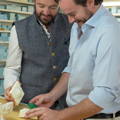
The art of craftsmanship
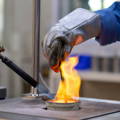
The role of the hand in modern craftsmanship
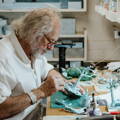
The lost wax casting process
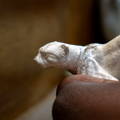
Finishing a piece

From observation to hand-drawn sketch

Scale in craftsmanship